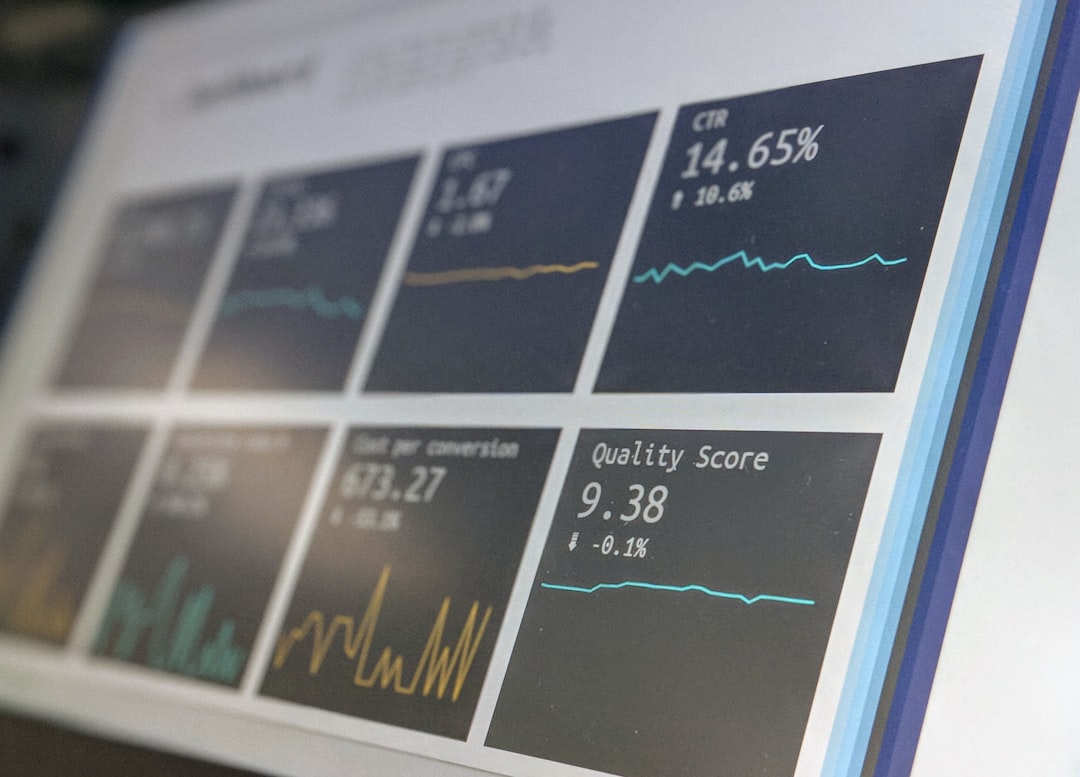
AI software as a service has moved from experimental novelty to a core part of modern business operations. Companies now use AI SaaS products for customer support, sales automation, analytics, content production, cybersecurity, finance, HR, legal review, and software development. Because the market is crowded and fast moving, buyers need a disciplined way to separate credible, durable products from tools that are merely impressive in a demo.
TLDR: Evaluating AI SaaS products requires more than comparing features; it requires assessing business value, model reliability, data governance, security, integration quality, and vendor maturity. Products can be classified by their primary function, level of automation, underlying AI capability, deployment model, and risk profile. A trustworthy evaluation process should include hands-on testing, measurable success criteria, compliance review, and total cost analysis. The best choice is rarely the most advanced model; it is the product that solves a defined business problem safely, consistently, and economically.
Why AI SaaS Evaluation Needs a Structured Approach
Traditional SaaS evaluation often focuses on usability, pricing, integrations, support, and feature depth. Those factors still matter, but AI introduces additional uncertainty. An AI SaaS product may produce variable outputs, depend on training data that is not visible to the buyer, and change behavior as models are updated. It may also process sensitive information, generate recommendations that affect customers or employees, or automate decisions that carry legal and reputational consequences.
For this reason, organizations should evaluate AI SaaS products through both a software lens and an AI risk lens. The software lens asks whether the product is useful, reliable, affordable, and compatible with existing workflows. The AI risk lens asks whether its outputs are accurate enough, explainable enough, secure enough, and governed well enough for the intended use case.

Start With the Business Problem
The first step is not to ask, “What can this AI tool do?” but rather, “What business problem are we trying to solve?” A product that looks powerful in isolation may be unnecessary if it does not address a real operational bottleneck or revenue opportunity.
Define the use case in practical terms:
- Target users: Who will use the product, and how often?
- Current pain point: What process is slow, expensive, inconsistent, or difficult to scale?
- Desired outcome: What measurable improvement is expected?
- Decision impact: Will the product inform decisions, automate tasks, or act directly on behalf of the company?
- Risk level: Could inaccurate output cause financial, legal, operational, or reputational harm?
This framing prevents technology-first purchasing. It also helps vendors demonstrate value against your actual requirements instead of presenting generic capabilities.
Classifying AI SaaS Products by Function
One useful way to classify AI SaaS products is by their business function. This helps buyers compare tools within the same operational category rather than treating all AI applications as interchangeable.
- Customer service AI: Chatbots, agent assistants, ticket triage, sentiment analysis, and knowledge base automation.
- Sales and marketing AI: Lead scoring, campaign generation, personalization, customer segmentation, and sales forecasting.
- Productivity and collaboration AI: Meeting summaries, document generation, email drafting, workflow automation, and enterprise search.
- Analytics and business intelligence AI: Predictive analytics, natural language querying, anomaly detection, and automated reporting.
- Developer AI: Code generation, code review, test creation, documentation, and software security assistance.
- Security AI: Threat detection, fraud monitoring, identity risk analysis, and incident response automation.
- Industry-specific AI: Tools built for healthcare, finance, legal, insurance, logistics, manufacturing, education, or real estate.
Industry-specific products often deserve extra scrutiny because they may operate in regulated environments. A general-purpose AI writing tool and an AI medical documentation platform should not be evaluated using the same risk standard.
Classifying by Level of Automation
Another critical classification method is the degree of autonomy. AI SaaS products vary widely in how much control they take over a process.
- Assistive AI: Provides suggestions, drafts, insights, or summaries while a human remains fully responsible for the final action.
- Augmentative AI: Improves an existing workflow by prioritizing tasks, recommending next steps, or reducing manual effort.
- Automated AI: Executes defined tasks with limited human intervention, such as routing tickets or generating standard reports.
- Autonomous AI agents: Plan and perform multi-step actions across systems, sometimes using external tools or APIs.
The higher the autonomy, the higher the governance burden. Assistive AI may require quality checks and user training. Autonomous AI may require permissions management, audit logs, approval workflows, rollback mechanisms, and strict monitoring.
Evaluate the Quality of Outputs
Output quality is central to AI SaaS evaluation, but it must be tested in context. A model that performs well on public examples may fail when exposed to company-specific terminology, messy historical data, multilingual content, or edge cases.
Use a structured testing process:
- Create a representative test set: Include normal cases, difficult cases, ambiguous cases, and high-risk cases.
- Define success criteria: Accuracy, completeness, consistency, tone, relevance, speed, and policy compliance should be measured where applicable.
- Compare against a baseline: Measure performance against the current manual process or existing software.
- Test repeatability: Run similar prompts or inputs multiple times to see whether outputs remain stable.
- Review failure modes: Identify when the system invents facts, omits important details, misunderstands instructions, or gives overconfident answers.
Accuracy alone is not enough. For many business uses, consistency, traceability, and the ability to handle exceptions are equally important.
Assess Data Governance and Privacy
AI SaaS products often require access to business data. This may include customer conversations, contracts, financial records, employee information, source code, or confidential strategy documents. Before adoption, buyers should understand exactly how data is collected, processed, stored, retained, and used.
Important questions include:
- Is customer data used to train the vendor’s models?
- Can training on customer data be disabled contractually and technically?
- Where is data stored and processed?
- What retention periods apply to prompts, outputs, files, and logs?
- Does the product support data deletion, export, and access controls?
- Are sensitive fields masked, encrypted, or isolated?
For regulated sectors, review whether the vendor supports relevant obligations such as GDPR, HIPAA, SOC 2, ISO 27001, PCI DSS, or other applicable standards. Certifications do not guarantee security, but they provide evidence that the vendor has formal controls in place.

Review Security Architecture
Security review should be proportional to the product’s access level. A tool that summarizes public marketing materials carries less risk than one connected to customer databases, payment systems, or internal communications.
Evaluate security across several areas:
- Identity and access management: Single sign-on, role-based permissions, multi-factor authentication, and granular admin controls.
- Encryption: Encryption in transit and at rest, plus key management practices.
- Auditability: Logs showing who accessed what, when, and what actions were taken.
- Vendor vulnerability management: Penetration testing, responsible disclosure, patching cadence, and incident response procedures.
- Prompt and model security: Protections against prompt injection, data leakage, malicious file inputs, and unauthorized tool use.
AI systems can be attacked in ways that traditional software cannot. For example, a malicious instruction hidden in a document may attempt to override system behavior. Vendors should be able to explain how they reduce these risks.
Examine Integration and Workflow Fit
An AI SaaS product may be technically impressive but operationally weak if it does not fit into existing workflows. Poor integration often leads to low adoption, duplicate work, and inconsistent data.
Consider whether the product integrates with core systems such as CRM, ERP, helpdesk, data warehouse, identity provider, project management tools, document repositories, and communication platforms. Also evaluate the quality of APIs, webhooks, admin dashboards, and reporting capabilities.
Workflow fit should be tested with real users. Ask whether the product reduces friction or adds another layer of work. The best AI SaaS products often succeed because they appear where users already work, not because users are forced to visit a separate interface.
Evaluate Vendor Maturity
In a fast-growing market, some AI SaaS vendors are early-stage companies with limited operating history. That is not necessarily a problem, but buyers should understand the implications. Vendor maturity affects reliability, support, roadmap stability, contract risk, and long-term viability.
Review the following:
- Company history: How long has the vendor operated, and who are its customers?
- Financial stability: Is the vendor likely to support the product over the contract term?
- Customer references: Can similar organizations confirm measurable value?
- Support quality: Are response times, escalation paths, and service levels clearly defined?
- Product roadmap: Is development aligned with your needs, or is the product direction uncertain?
- Model dependency: Does the vendor rely entirely on a third-party model provider, and what happens if pricing or access changes?
A trustworthy vendor should be transparent about limitations. Overstated claims, vague answers about data usage, or resistance to security review are warning signs.
Understand Pricing and Total Cost
AI SaaS pricing can be complex. Vendors may charge by seat, usage, token volume, workflow, document, API call, automation run, or outcome. A low entry price may become expensive at scale, especially for products that process large volumes of text, images, audio, or data.
Calculate total cost of ownership, including:
- Subscription fees and usage overages
- Implementation and migration costs
- Integration development
- Training and change management
- Security and compliance review time
- Ongoing administration and monitoring
- Potential costs of errors, downtime, or vendor lock-in
Evaluate pricing against measurable value. If the tool saves 1,000 hours per month, improves conversion rates, or reduces support backlog, the business case may be strong. If benefits are vague, even an inexpensive tool may be hard to justify.
Create a Scoring Framework
A scoring framework helps compare AI SaaS products objectively. Assign weights based on your organization’s priorities and risk tolerance. For example:
- Business value: 25%
- Output quality and reliability: 20%
- Security and privacy: 20%
- Integration and usability: 15%
- Vendor maturity: 10%
- Total cost: 10%
For high-risk use cases, increase the weight for security, explainability, compliance, and human oversight. For low-risk productivity tools, usability and adoption may carry more weight. The purpose is not to make the decision purely mathematical, but to force consistent comparison and prevent selection based only on enthusiasm or brand recognition.

Run a Controlled Pilot
Before enterprise-wide adoption, run a pilot with defined scope and success metrics. The pilot should include real users, real workflows, and realistic data, while still limiting exposure and risk. Establish what the product is allowed to access, what actions it can take, and who reviews its outputs.
Measure both quantitative and qualitative outcomes. Quantitative metrics may include time saved, error reduction, response time, resolution rate, cost per task, or revenue impact. Qualitative feedback may include user trust, ease of use, perceived accuracy, and willingness to continue using the product.
At the end of the pilot, decide whether to adopt, reject, renegotiate, or continue testing. Document the decision so future evaluations can benefit from what was learned.
Red Flags to Watch For
Some warning signs should slow or stop procurement:
- Unclear explanation of how customer data is used
- No meaningful security documentation
- Claims of perfect accuracy or fully risk-free automation
- No audit logs or administrative controls
- Weak support for compliance requirements
- Poor performance on realistic test cases
- Pricing that is difficult to forecast
- Vendor unwillingness to support a pilot or provide references
AI SaaS products should be evaluated with healthy skepticism. A serious vendor will expect detailed questions and should be prepared to answer them.
Conclusion
Evaluating and classifying AI SaaS products requires a balanced view of opportunity and risk. The most effective approach begins with a clear business problem, classifies products by function and autonomy, tests output quality under realistic conditions, and examines privacy, security, integration, vendor maturity, and cost.
The market will continue to evolve quickly, but the fundamentals of responsible evaluation will remain stable. Organizations that use structured criteria and controlled pilots will be better positioned to adopt AI SaaS products that deliver real value. The goal is not simply to buy AI; it is to deploy reliable software that improves work, protects data, and supports sound decision-making.