
Artificial Intelligence (AI) has undergone rapid transformation in recent years, with applications expanding from simple chatbots to complex systems capable of interpreting text, speech, and even images. One of the most talked-about advancements in this field is OpenAI’s ChatGPT, a language model renowned for its detailed textual responses. But a question that often arises is: Can ChatGPT really analyze images? In this article, we explore the capabilities, features, and boundaries of ChatGPT’s image understanding to find out how far AI has come in crossing the bridge between language and vision.
Understanding ChatGPT’s Visual Capabilities
The latest versions of ChatGPT—especially those powered by GPT-4 with multimodal capabilities—can indeed analyze images. This is primarily possible when users access the model through enabled platforms like ChatGPT Plus with GPT-4 Turbo. When empowered with visual inputs, the system can interpret images, offering descriptions, identifying objects, extracting text, and even analyzing charts.
However, this ability doesn’t mean the AI “sees” images the way humans do. The model processes images through underlying computer vision systems trained on vast datasets. What it “understands” is based on visual features mapped to textual concepts. For example, given a photo of a street, ChatGPT might describe vehicles, pedestrians, road signs, and even infer the time of day based on lighting.
Common Use Cases
With visual understanding abilities, ChatGPT opens doors to various real-world applications. Some of the most common uses include:
- Image Captioning: Generating descriptive text for photos and graphics.
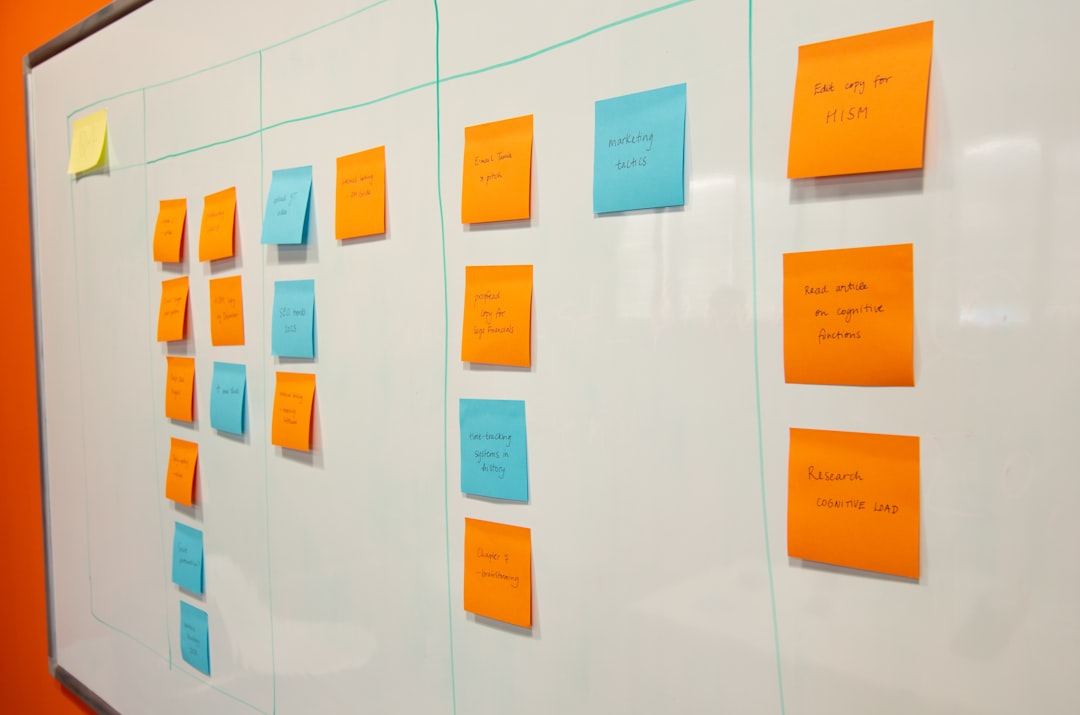
- Text Recognition: Reading and interpreting text embedded in images via OCR (Optical Character Recognition).
- Chart and Graph Analysis: Summarizing trends and conveying data insights from visual graphs.
- User Interface Assistance: Helping visually impaired users by describing screen content or web pages.
These capabilities can be critical for professionals in education, healthcare, accessibility, and even creative arts who rely on automated insights derived from visuals.
Limitations of ChatGPT’s Image Analysis
Despite its impressive abilities, ChatGPT has its limitations. Understanding the constraints is crucial to having realistic expectations and avoiding over-reliance on AI systems:
- Ambiguity in Complex Scenes: In photos with high visual complexity or poor resolution, the model may miss important details or misinterpret elements.
- No Real-Time Video Interpretation: Current capabilities are limited to analyzing static images; video interpretation or motion tracking is not yet supported.
- Inability to Understand Nuanced Emotions: Though it can detect expressions, the AI cannot truly comprehend emotional context in the same way humans do.
- Ethical Boundaries: The system does not identify people, medical conditions, or sensitive data to maintain privacy and ethical standards.
Strengths Compared to Other AI Tools
Compared to traditional computer vision tools, ChatGPT offers the unique benefit of integrating image analysis with conversational capabilities. This allows users to engage in a dialogue about the image, ask follow-up questions, or request deeper analysis in real time. For instance, a user could show a graph and ask, “What does this spike indicate?” and further refine the question based on the model’s initial response.
That kind of interaction is difficult with rigid vision models, making ChatGPT a flexible and intuitive tool for dynamic workflows.
Conclusion
ChatGPT’s ability to analyze images represents a giant step toward combining visual and linguistic intelligence in AI. While there are still boundaries around accuracy, nuance, and real-world complexity, the model already offers a rich set of tools to assist with visual interpretation. As the technology continues to evolve, we can expect even more seamless integration between words and images, making ChatGPT—and similar systems—indispensable across disciplines.
Frequently Asked Questions (FAQ)
- Q: Can ChatGPT analyze any image?
A: It can analyze most common image formats like JPG and PNG, but may struggle with very low-resolution or highly complex images. - Q: Does ChatGPT identify people or faces?
A: No, for privacy and safety, it does not perform facial recognition or identify individuals. - Q: Can it read handwritten text?
A: In many cases, yes. However, accuracy depends on handwriting clarity. - Q: What platforms support image uploading for ChatGPT?
A: Platforms like ChatGPT Plus with GPT-4 Turbo allow image uploads through the interface, depending on access and plan. - Q: Is it possible to analyze multiple images at once?
A: It’s generally best to analyze one image at a time, but users can upload several images in sequence for comparison or discussion.