
Artificial intelligence is often introduced inside companies as a tool for automation, prediction, or efficiency. Yet its most valuable role may be more strategic: helping leaders ask better questions before they commit money, people, and time. In conversations around enterprise AI, including perspectives associated with Dharmateja from Amazon, the strongest theme is not simply “How do we use AI?” but “What business decision can AI help us improve?”
TLDR: AI creates real business impact when it becomes a disciplined “what if” machine: a system for testing decisions, simulating scenarios, and reducing uncertainty. The companies that benefit most do not treat AI as a standalone experiment; they connect it to measurable business outcomes, operational workflows, and responsible governance. Leaders should begin with high-value decisions, define success clearly, and use AI to support judgment rather than replace it.
From prediction to decision support
For years, organizations have used analytics to understand what happened and, later, to predict what might happen next. AI moves the conversation further. It can help teams explore possible futures: What if demand rises in one region and falls in another? What if a supplier fails? What if we change pricing, staffing, marketing spend, or inventory levels?
This is the core idea behind the “what-if” machine. AI is not only a faster calculator or a more sophisticated dashboard. At its best, it becomes a structured environment for testing assumptions. It gives leaders a way to examine tradeoffs before they become expensive realities.
That distinction matters. A prediction may tell a retailer that demand for a product is likely to increase by 12 percent. A decision-support system goes further: it can show the inventory, logistics, margin, and customer-experience implications of responding in different ways. The business value is not in the forecast alone. It is in the quality of the decision the forecast enables.
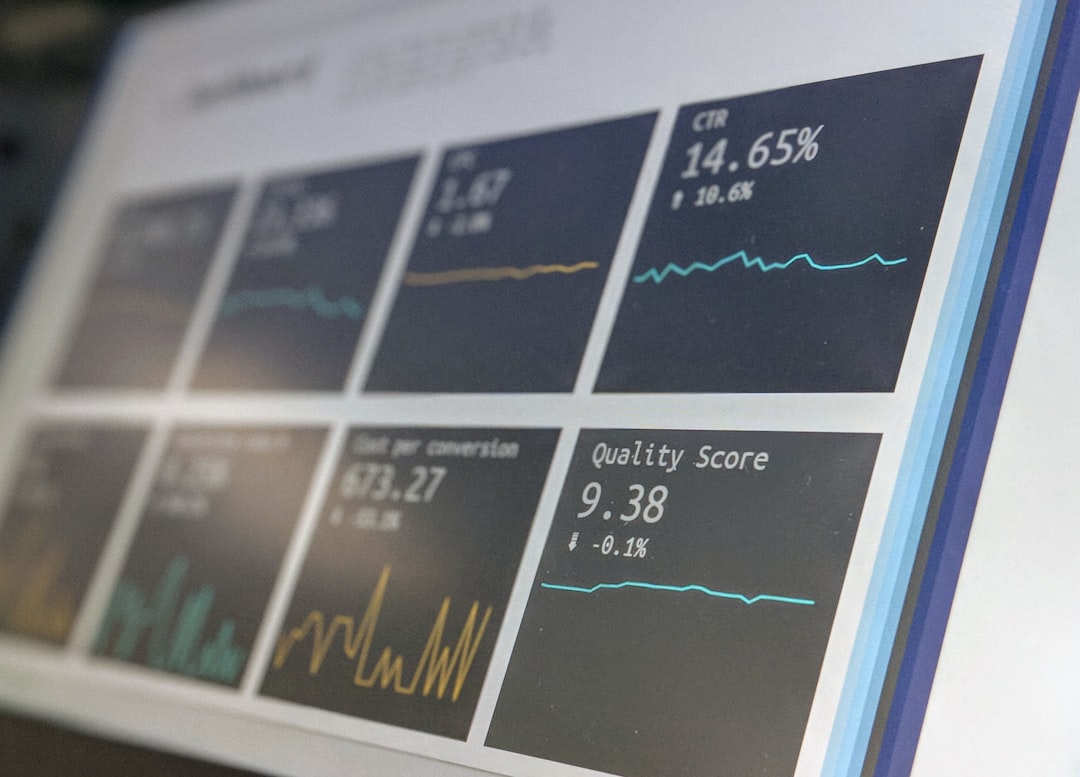
Why the “what-if” mindset fits enterprise AI
Large organizations operate through thousands of recurring decisions. Some are strategic, such as entering a market or investing in a new product line. Others are operational, such as routing deliveries, allocating customer service capacity, or deciding when to restock inventory. Across both categories, the same challenge appears: leaders rarely have perfect information.
AI can reduce this uncertainty by identifying patterns, modeling probabilities, and surfacing options that would be difficult for humans to evaluate manually. However, serious organizations do not deploy AI because it is fashionable. They deploy it when it can improve decisions at scale.
Amazon’s business environment illustrates this principle well. The company operates across retail, cloud computing, logistics, devices, media, advertising, and more. In such a setting, business impact depends on systems that can handle complexity, support speed, and learn continuously. A “what-if” approach aligns with that reality because it emphasizes practical outcomes over technical novelty.
The business question must come first
The most common mistake in enterprise AI is beginning with the technology. A team selects a model, builds a prototype, and then searches for a use case. This often produces impressive demonstrations but limited business impact.
A more reliable approach begins with the decision. Leaders should ask:
- Which decision is expensive, frequent, or strategically important?
- What uncertainty makes that decision difficult?
- What data could improve the decision?
- How will we measure better performance?
- Who will use the AI output, and when?
These questions keep AI grounded. They also prevent teams from confusing activity with progress. A model that is accurate but unused has little value. A simpler model that improves a critical workflow may create substantial value.
Dharmateja’s Amazon context is useful here because Amazon’s culture has long emphasized customer obsession, experimentation, and operational excellence. Those principles translate directly into effective AI adoption. The purpose is not just to create “intelligent” systems. The purpose is to improve outcomes for customers, employees, partners, and the business.
Turning scenarios into measurable impact
A “what-if” machine becomes valuable when its scenarios are tied to metrics. For example, a logistics team may use AI to simulate different delivery routes under weather disruption. The model might compare cost, delivery time, emissions, driver availability, and customer satisfaction. Each scenario offers a different balance of priorities.
In finance, AI might help evaluate cash-flow risk under changing interest rates or delayed payments. In retail, it might test promotional strategies before discounts are launched. In human resources, it might forecast staffing needs under several hiring and attrition assumptions. In cloud operations, it might estimate capacity needs before demand spikes.
The point is not that AI delivers a single perfect answer. Serious business decisions rarely have one. The point is that AI helps leaders see the consequences of competing choices more clearly.
Impact appears when AI changes behavior. If teams plan earlier, allocate resources better, prevent failures, or respond faster because of AI-generated scenarios, then the technology is creating business value. If it merely produces reports that no one trusts or uses, then it is not.

The role of human judgment
Trustworthy AI systems do not remove people from decision-making. They improve the quality and speed of human judgment. This is especially important in high-stakes environments where context, ethics, customer expectations, and long-term reputation matter.
AI may identify a cost-saving option, but leaders must decide whether that option aligns with service commitments. AI may recommend a pricing change, but business teams must consider customer perception and competitive dynamics. AI may suggest operational efficiencies, but managers must understand the effect on employees and partners.
This is why the best framing is AI as decision support, not AI as decision replacement. The machine can generate scenarios, quantify risks, and expose hidden relationships. Human leaders remain responsible for interpretation, accountability, and values.
Data quality is a business issue, not only a technical issue
No “what-if” machine can be stronger than the data and assumptions behind it. If the data is incomplete, biased, outdated, or poorly governed, the scenarios will be unreliable. This is not simply an engineering problem. It is a business leadership problem.
Reliable AI requires clear ownership of data sources, definitions, permissions, and quality standards. Teams need to know what a metric means, where it comes from, and whether it can be trusted. A sales forecast, for example, becomes less useful if different departments define “active customer” differently.
Organizations that succeed with AI often invest in the less glamorous foundations: clean data pipelines, strong documentation, monitoring, security, governance, and cross-functional alignment. These foundations determine whether AI can move from pilot projects into everyday business operations.
Responsible AI as a condition for scale
As AI becomes more involved in business decisions, responsible use becomes essential. This includes privacy, security, fairness, explainability, and human oversight. A company may be able to deploy a model quickly, but if stakeholders cannot understand, monitor, or challenge its outputs, adoption will suffer.
Responsible AI is not a barrier to innovation. It is what allows innovation to scale safely. Leaders should ask whether the system can explain the factors behind a recommendation, whether sensitive data is protected, whether outputs are monitored for drift, and whether there is a clear process for escalation when the model appears wrong.
In serious enterprise environments, trust is operational. Employees must trust the system enough to use it. Customers must trust the company enough to accept AI-enabled experiences. Regulators and partners must trust that the organization manages risk carefully.
How leaders can begin
Companies do not need to transform everything at once. A disciplined starting point is to select one decision area where improved judgment would clearly matter. The ideal use case has accessible data, a defined business owner, measurable outcomes, and enough repetition to learn over time.
A practical roadmap might include:
- Identify a high-value decision. Focus on decisions with meaningful cost, revenue, risk, or customer-experience implications.
- Define the “what-if” questions. Clarify the scenarios leaders need to compare.
- Establish success metrics. Decide how value will be measured before the model is built.
- Build with users, not just for users. Involve the teams who will rely on the AI output.
- Monitor performance over time. Track accuracy, adoption, business impact, and unintended consequences.
This approach reduces the risk of overinvestment in unproven ideas. It also builds organizational confidence. When one use case demonstrates value, other teams can adapt the pattern.

What real impact looks like
Real business impact from AI is often practical rather than dramatic. It may look like fewer stockouts, better capacity planning, reduced customer wait times, faster fraud detection, more effective marketing allocation, or improved financial forecasting. These outcomes may not sound as spectacular as artificial general intelligence, but they matter because they improve how the business performs.
The “what-if” machine is therefore a useful way to separate meaningful AI from superficial AI. If a system helps people understand scenarios, compare tradeoffs, and make better decisions, it deserves attention. If it only adds complexity or produces generic outputs, it should be questioned.
For leaders, the message is clear: do not measure AI success by the sophistication of the model alone. Measure it by the decisions it improves and the value those decisions create. That is where AI moves from experimentation to operational advantage.
Conclusion: AI as a disciplined business capability
The next phase of enterprise AI will be defined less by isolated demos and more by reliable decision systems. Organizations will need AI that can model uncertainty, test assumptions, and support responsible action. They will also need leaders who understand that technology alone is not strategy.
The “what-if” machine is a serious, practical model for turning AI into business impact. It encourages companies to start with decisions, connect scenarios to metrics, preserve human accountability, and build trust through governance. In that sense, the lesson associated with Dharmateja and Amazon is not about chasing AI for its own sake. It is about using AI to ask sharper questions, make stronger choices, and create measurable value where it matters most.