
Artificial intelligence has changed the way we search for information. Instead of typing keywords into a search bar, users can now upload a photo and instantly receive visually similar results, product matches, or detailed explanations about what appears in the image. This technology, known as AI visual search, is redefining how we interact with digital content. From retail and healthcare to manufacturing and social media, visual search tools are becoming more accurate, accessible, and powerful.
TLDR: AI visual search allows users to search using images instead of text by analyzing visual features such as shapes, colors, patterns, and objects. It relies on deep learning models, particularly convolutional neural networks (CNNs), to understand and compare image data. The system converts images into mathematical representations and matches them against vast indexed databases. While highly effective, visual search depends on high-quality data and sophisticated training to deliver accurate results.
What Is AI Visual Search?
AI visual search is a technology that enables computers to recognize, analyze, and retrieve information based on images. Rather than interpreting words, the system interprets visual signals. If you upload a photo of a chair, for example, the system identifies key visual features and returns similar chairs available for purchase or related design inspirations.
This differs from traditional image search, which typically relies on:
- File names
- Manual tags
- Surrounding text descriptions
AI visual search, by contrast, analyzes the content inside the image itself, without needing human-written labels.
The Core Technologies Behind AI Visual Search
To understand how AI visual search works, it is helpful to examine its primary technical components.
1. Computer Vision
Computer vision is the field of AI that enables machines to interpret and understand visual information. It allows systems to detect shapes, objects, faces, text, and even motion within static or moving images.
At its foundation, computer vision converts images into structured data by breaking them down into:
- Pixels
- Color values
- Intensity gradients
- Edges and contours

2. Deep Learning and Neural Networks
Modern visual search systems rely heavily on deep learning, particularly Convolutional Neural Networks (CNNs). CNNs are designed specifically to process image data. They apply layered mathematical filters to detect patterns such as:
- Edges
- Textures
- Shapes
- Complex objects
Each layer of the network extracts increasingly complex features. Early layers detect simple lines and contrasts. Deeper layers recognize higher-level structures like eyes, wheels, logos, or specific products.
3. Feature Extraction and Vectorization
Once an image is analyzed, the system transforms it into a feature vector. This is a numerical representation of the image’s most important visual characteristics.
Instead of storing the entire image for comparison, the system stores this condensed mathematical representation. When a new image is uploaded, its vector is compared with millions (or billions) of stored vectors to find the closest match.
4. Similarity Matching Algorithms
After converting images into vectors, visual search engines use similarity algorithms to measure distance between them in high-dimensional space. The closer two vectors are, the more visually similar the images appear to the algorithm.
Common approaches include:
- Cosine similarity
- Euclidean distance
- Approximate nearest neighbor (ANN) search
These techniques allow systems to deliver near-instant results, even across massive databases.
Step-by-Step: How AI Visual Search Works
To make the process clearer, here is a simplified breakdown of what happens when you upload an image to a visual search system:
- Image Input: The user uploads a picture.
- Preprocessing: The system resizes, normalizes, and enhances the image for analysis.
- Feature Extraction: A neural network identifies patterns and converts the image into a feature vector.
- Database Comparison: The vector is compared against indexed image vectors.
- Ranking Results: The system returns the most visually similar matches.

This entire process typically occurs in milliseconds.
Key Applications of AI Visual Search
AI visual search has practical uses across multiple industries. Below are some of the most significant applications.
Retail and E-commerce
One of the most widespread uses is in online shopping. Customers can upload a photo of a product they like, and the system finds visually similar items in stock. This improves:
- Product discovery
- User engagement
- Conversion rates
Retailers benefit because customers may not know the exact name or description of a product but can easily provide an image.
Healthcare
In medical imaging, AI systems can analyze X-rays, MRIs, and skin images to assist doctors in identifying abnormalities. Visual search models can compare patient scans with millions of prior cases to support diagnosis.
It is important to note: These tools typically assist professionals rather than replace them.
Manufacturing and Quality Control
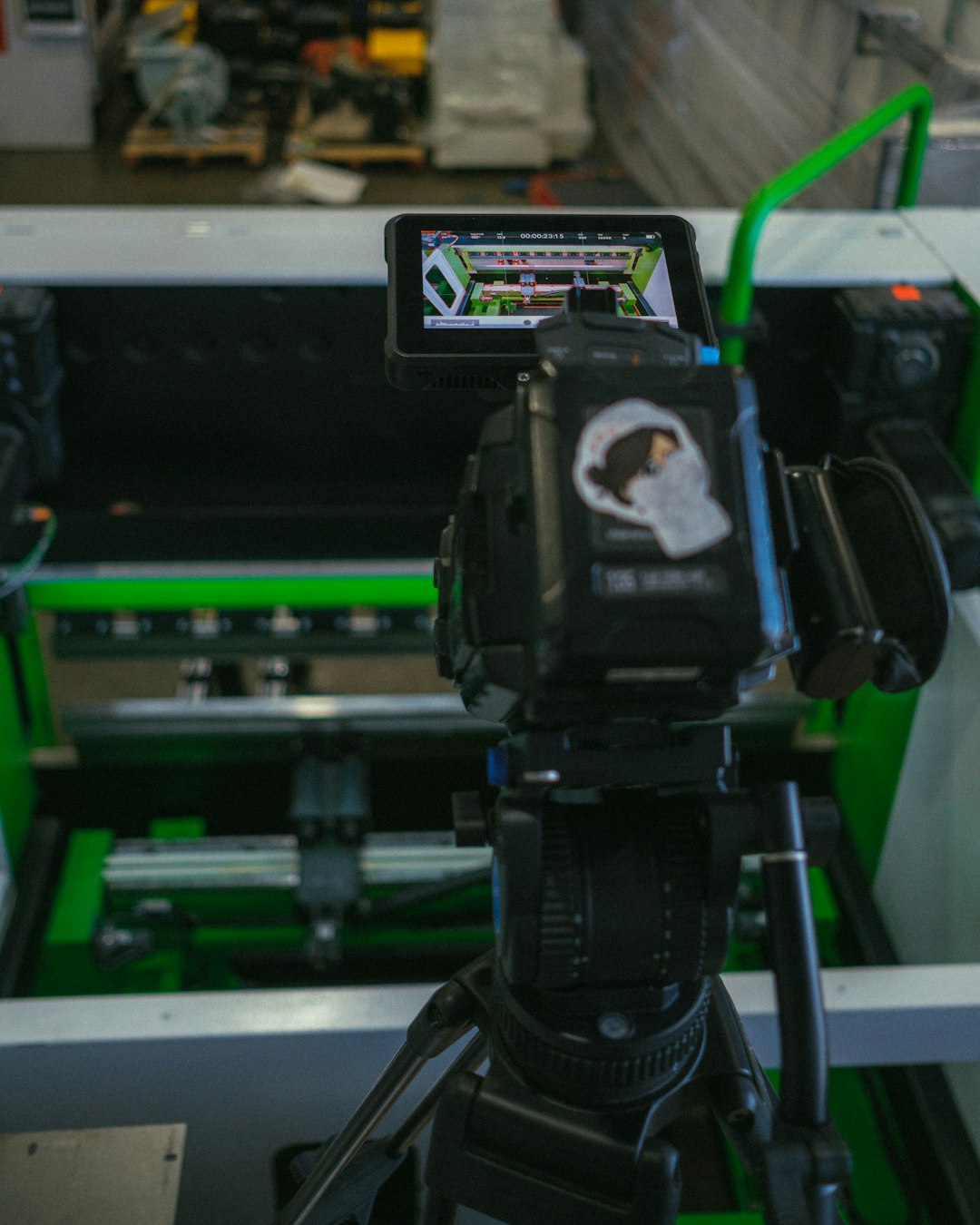
AI visual systems can detect defects in products during manufacturing processes. Cameras capture images in real time, and AI instantly identifies irregularities that may be invisible to the human eye.
Digital Asset Management
Media companies and large organizations use visual search to organize massive image libraries. Instead of manually tagging every file, AI automatically categorizes and retrieves visual content.
What Makes AI Visual Search Accurate?
The success of a visual search system depends on several factors:
1. High-Quality Training Data
AI models learn from large labeled datasets. The greater the diversity and quality of images in training data, the better the system performs in real-world scenarios.
2. Robust Model Architecture
Advanced neural network designs improve accuracy. Modern architectures are optimized to capture fine visual distinctions and contextual relationships within images.
3. Continuous Learning
Some systems improve over time through feedback loops. When users select certain search results, that interaction data can help refine future results.
4. Large and Well-Indexed Databases
Even the best algorithm cannot return relevant results if the database lacks comparable images. Efficient indexing structures ensure fast and reliable similarity searches.
Limitations and Challenges
Despite its strengths, AI visual search is not without challenges.
- Ambiguity: Images can contain multiple objects, making interpretation complex.
- Lighting and Quality Issues: Poor resolution or unusual lighting reduces accuracy.
- Bias in Training Data: Models reflect the diversity and balance of their datasets.
- Privacy Concerns: Facial recognition and personal image analysis raise ethical questions.
Additionally, visual similarity does not always imply functional similarity. Two shirts may look alike but be made of completely different materials.
Visual Search vs. Text Search
While text search relies on language processing, visual search relies on pattern recognition. Each approach has strengths:
- Text Search: Effective when users know specific names or terms.
- Visual Search: Effective when users lack vocabulary but have a reference image.
Increasingly, systems combine both approaches into multimodal AI, which analyzes images and text simultaneously for improved accuracy.
The Future of AI Visual Search
The technology continues to evolve rapidly. Advances in:
- Large vision-language models
- Real-time processing
- Edge computing
- Augmented reality integration
are expected to enhance both speed and contextual understanding.
In the near future, visual search could seamlessly integrate into wearable devices, enabling users to receive instant information about objects in their environment simply by looking at them.
Conclusion
AI visual search represents a significant advancement in how humans interact with digital systems. By combining computer vision, deep learning, feature extraction, and similarity algorithms, these systems transform images into searchable data. The process is highly technical but operates with remarkable speed and efficiency.
As industries continue to adopt visual search solutions, accuracy and accessibility will likely improve even further. While limitations remain, particularly around data quality and ethics, the core technology has already proven its reliability in commercial and industrial applications.
For beginners, the essential takeaway is simple: AI visual search works by teaching machines to “see” patterns in images, convert those patterns into mathematical representations, and compare them at scale. It is not magic; it is structured data science, powered by advanced neural networks and vast computational resources.